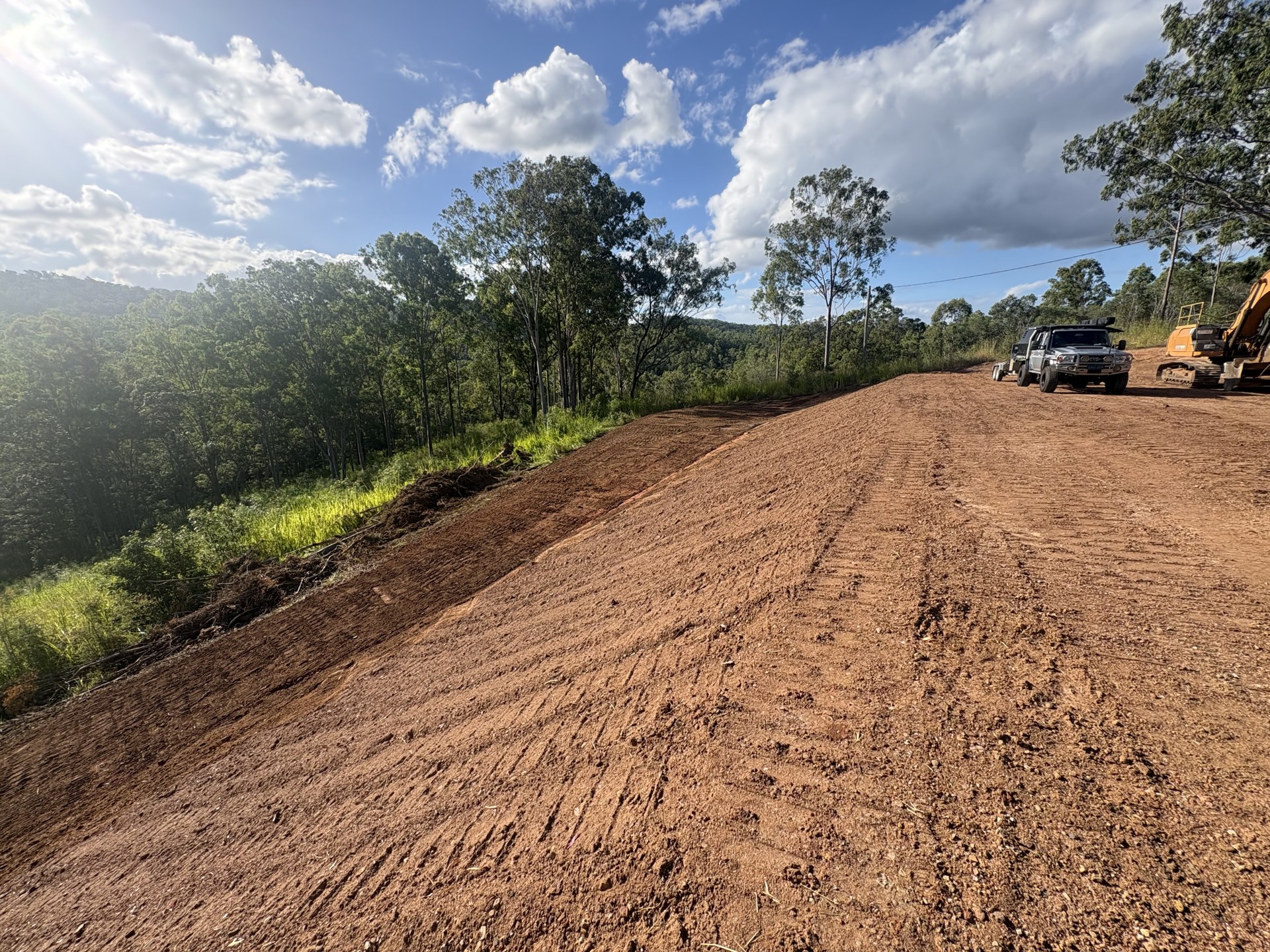
A pad looks like a simple flat patch of dirt. What you're actually paying for is ground that drains away from the build, sits on material that won't move, and gives the builder or shed crew a level surface to set out from.
What a proper cut includes
- Stripping topsoil and organic material off the footprint — it's compressible and has to go.
- Cut and fill balanced on site where possible, so you're not paying to cart material.
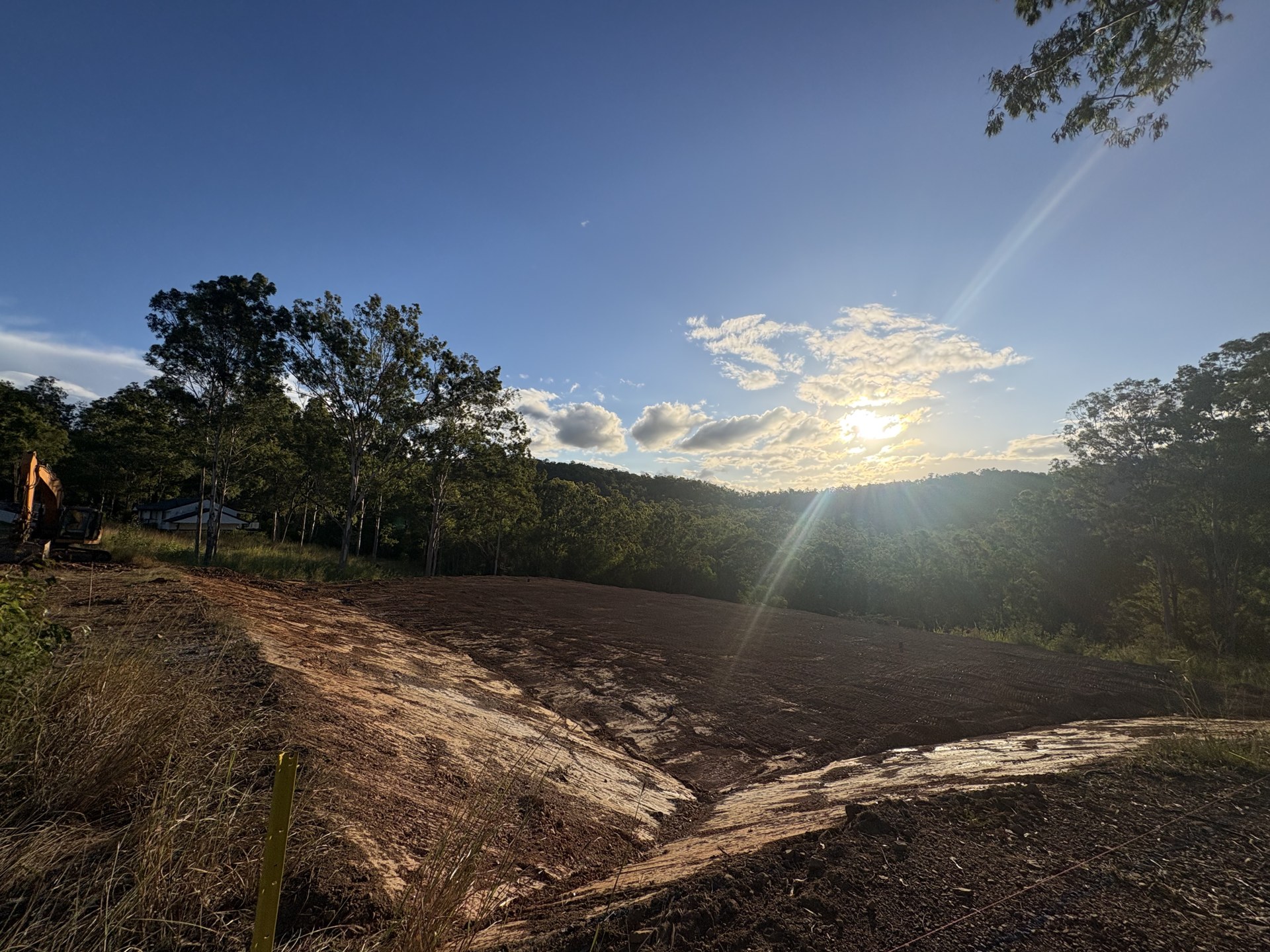
- Fall built in so water runs away from the slab, not into it.
- Batters shaped at a stable angle so they don't slump in the first storm.
- Fill placed in layers and compacted, not just pushed into the low side.
Mistakes that cost later
- Building on uncompacted fill — the slab tells you about it eventually.
- No thought given to where the driveway ties into the pad level.
- Forgetting service trenches and tank pads while the machine is still on site.
- Cutting a pad flat with no drainage fall at all.
If you've got an engineer's plan or a builder's set-out, bring it to the site visit. If you haven't, we can talk through where the pad sits best on the block before anything gets cut.