

Silt creeps up on you. A dam that carried stock through a dry summer ten years ago can be holding half the water it used to, and nothing about it looks obviously wrong from the bank.
Signs it's time
- The dam runs dry earlier each year despite decent rain.
- Water is shallow and warm right across the middle, not just the edges.
- Reeds and weed spreading in from the banks.
- Stock walking well out into the dam instead of drinking at the edge.
- A wall that's slumped, leaking or washed out at the spillway.
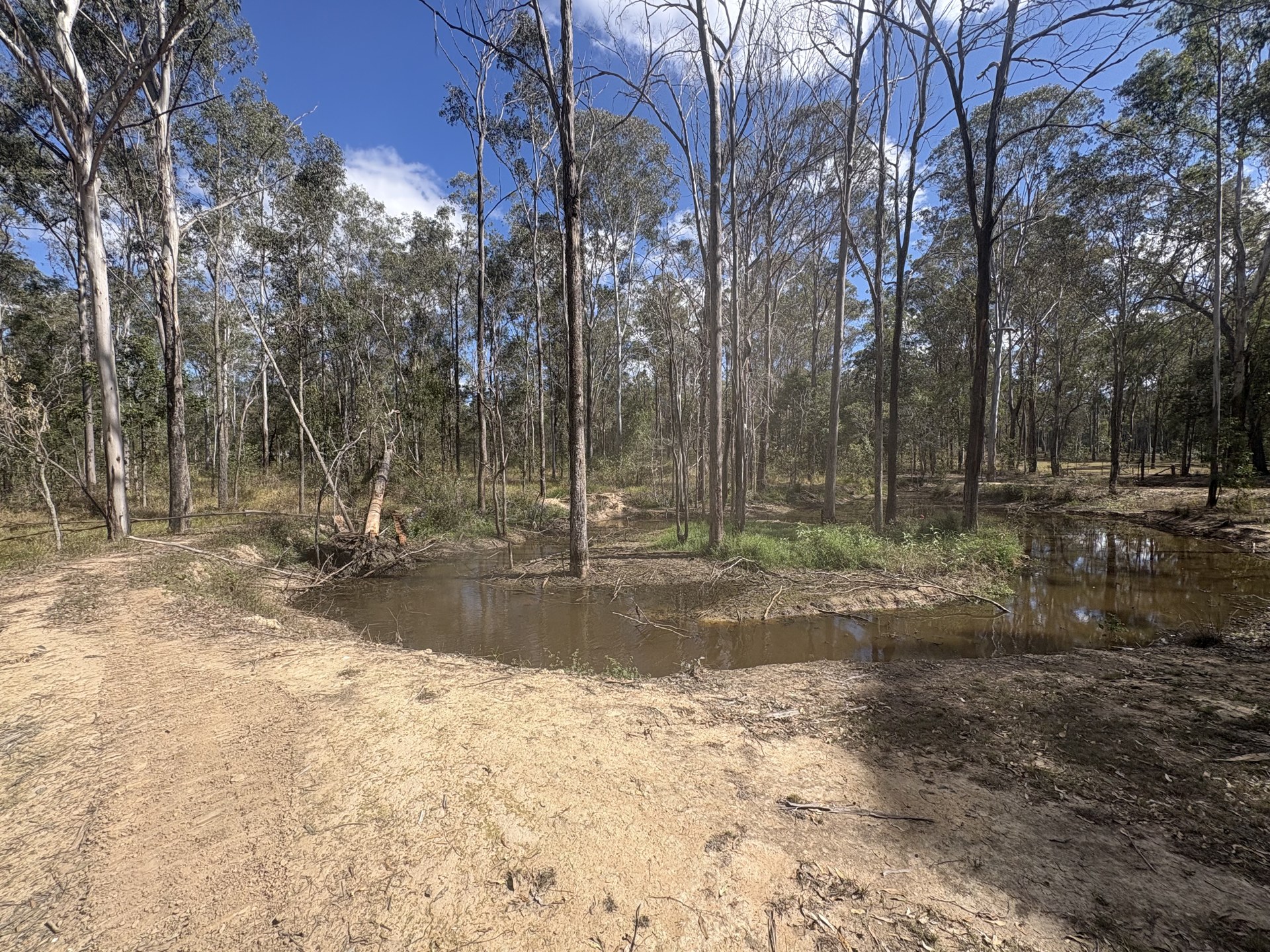
What the job involves
- Excavating accumulated silt back to a proper depth and profile.
- Reshaping walls and batters so they hold and don't slump.
- Spillway repair so overflow leaves without cutting the wall out.
- Placing the silt — spread on paddock, stockpiled, or used to build the wall up.
When to do it
The dry end of the year is the window. A low or empty dam means the machine can work the base properly and the silt is dry enough to move and place. Waiting for a wet spring usually means waiting another twelve months.
We desilt existing dams and build new ones around Gympie, Curra, Glastonbury, Corella and out to Kilkivan and Tin Can Bay. Send a photo and a rough size and we'll tell you what's involved.